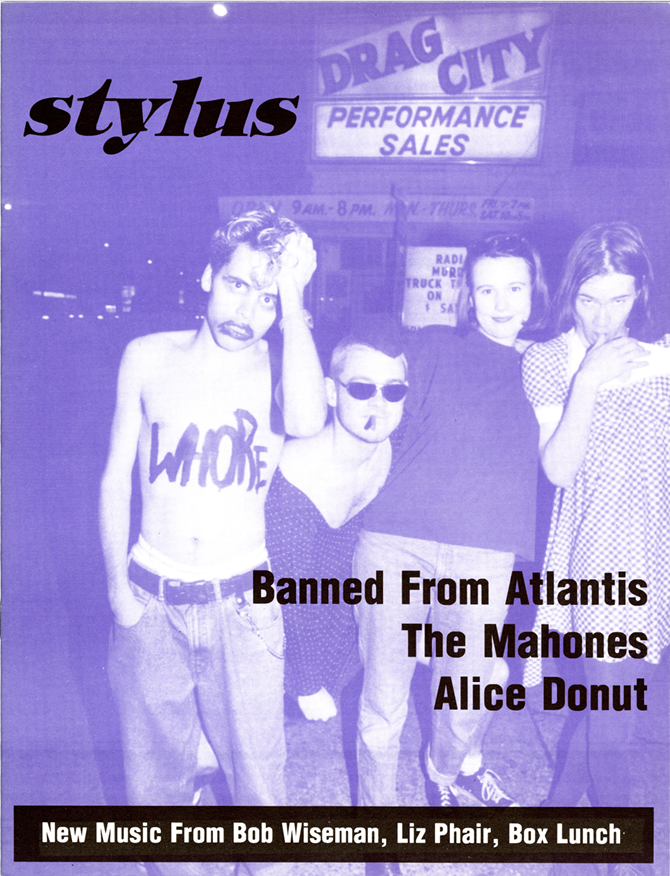

Cover art of Stylus vol. 6, no. 2 (November 1994), chosen arbitrarily to illustrate the point that old copies of the magazine are now being digitized
If you’re anything like me, you have an incorrigible fondness for what Walter Benjamin would call “[poking] about in the past as if rummaging in a storeroom of examples and analogies.” In which case: I am delighted to announce the good news. Stylus is saved!
Some readers may well be scratching their heads right about now.
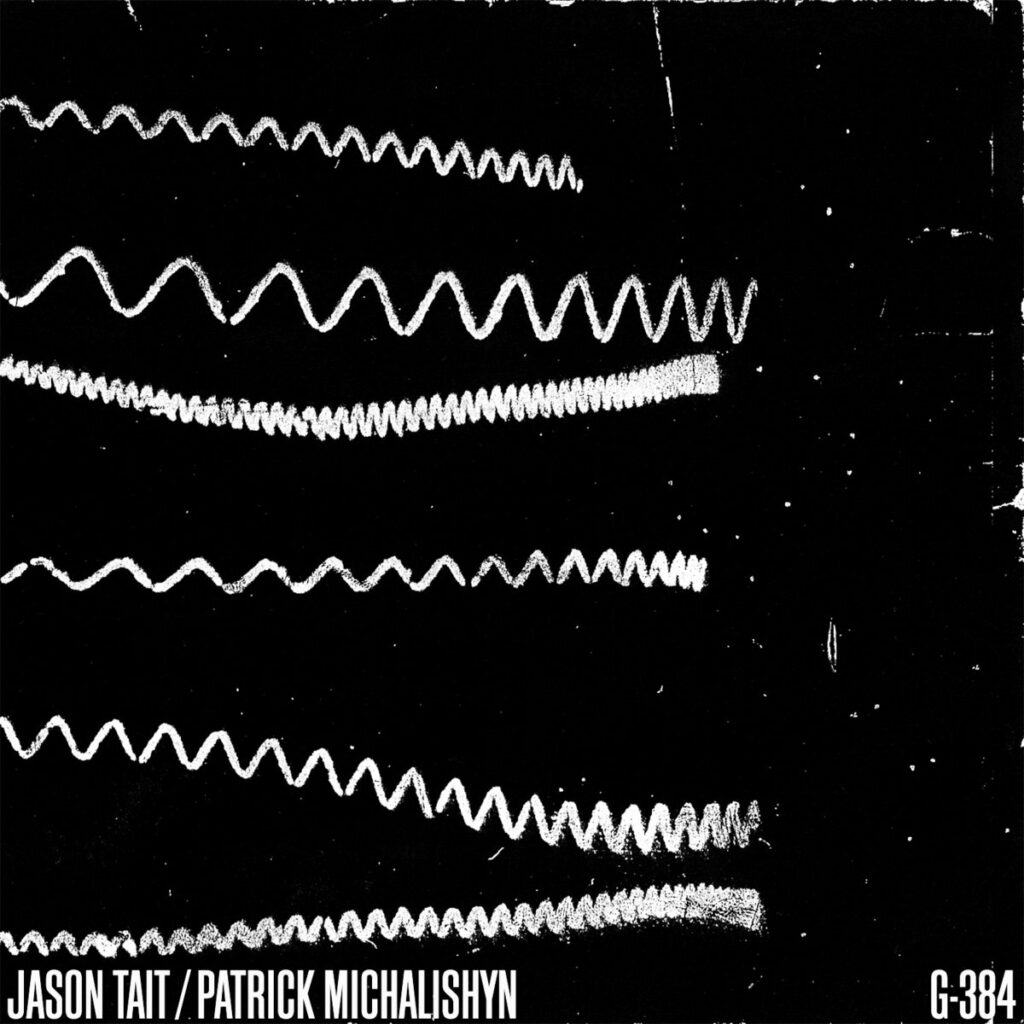
“Jason Tait, huh? Yeah, I recognize him. The drummer from Red Fisher and that other band — you know, the one with that song about Gump Worsley! Patrick Michalishyn, though: now where have I seen that name before?”
Try “one page ago,” on account of the above “CKUWho?” profile. In the interest of full transparency, I should mention that he did ask me to review his split tape, and I obliged. So let it be known — if you ask nicely enough and I have a spare evening, I’ll just do whatever you say. I’m easygoing and I crave the approval of others! (And on that note: if you have an album you’d like me to review, shoot me an email at [email protected].)
The year draws to a close. The usual signifiers of the season put in their scheduled appearances: the sidewalks and rooftops lined with snow, trees and eavestroughs strung with lights, doors bedecked with wreaths. There is a palpable cheer in the air. All of this can only mean one thing.
It’s time for some half-baked listicle slop, baby! Seemingly every media outlet spends their December churning out their curated selections of the year’s best songs, albums, movies, books, games, etc. — so why shouldn’t I compel Stylus to get in on the fun? Who am I to resist the omnipresent allure of list-making?
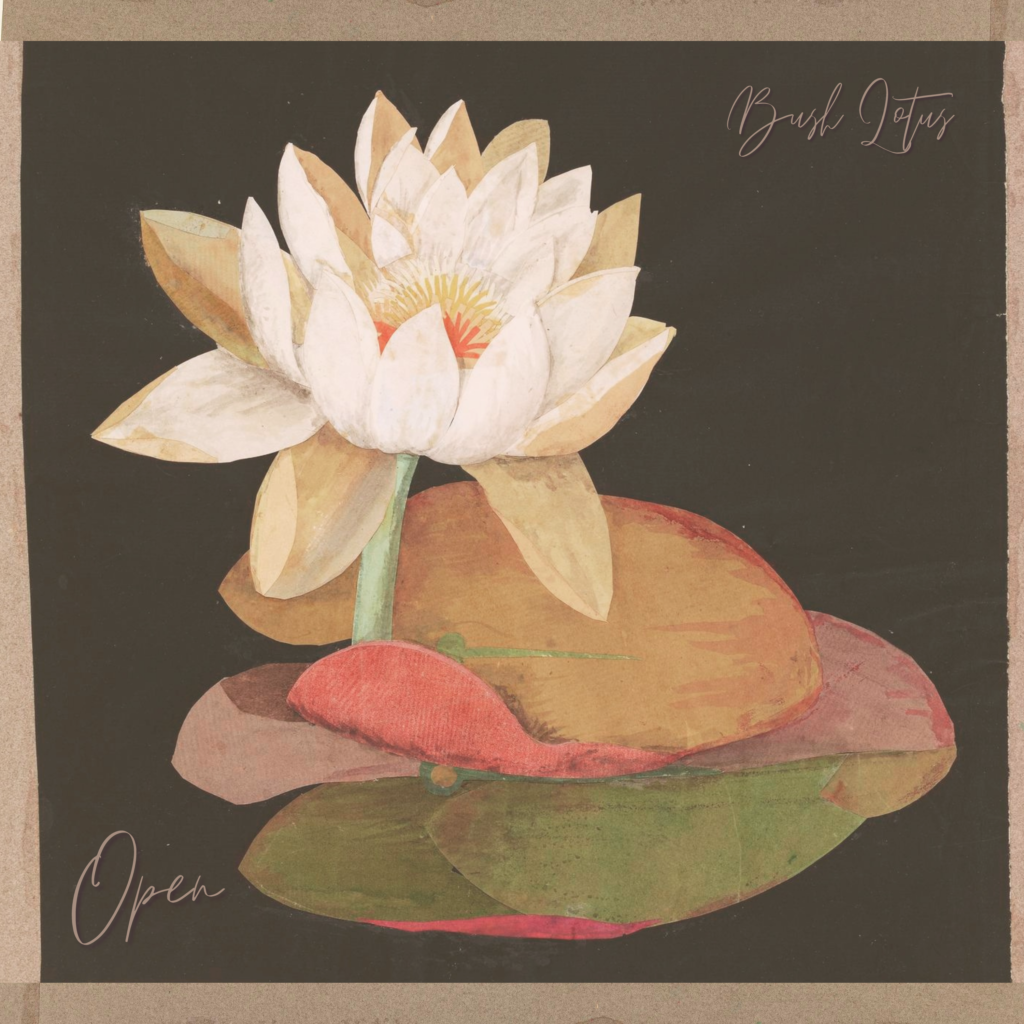
As was the case with their first performance this March, opening for Tinge at the Handsome Daughter, there is a confidence to Bush Lotus’s writing and sound that feels at odds with their experience.
Lyrically, “Open” is spare, but far from simple. When written out, it functions almost seamlessly as a series of linked Haiku. True to that form, songwriter Arielle Beaupre injects meaning and poignancy into a sliver of time. In this case, a moment of intense presence while stretching in a parking lot, presumably after hours in a car moving along tree-lined highways: